Sky Replacement for Real Estate Photos: A Complete Guide
Of all the things outside a photographer's control on shoot day, the sky is the biggest one. The house doesn't move, the staging can be fixed, the lighting can be adjusted — but if the sky is flat white overcast on the one day the shoot was scheduled, that's what's going in every exterior photo unless something changes it after the fact.
Why a dull sky matters more than it seems like it should
A washed-out, featureless sky doesn't just look less attractive in isolation — it flattens the whole photo. Skies provide contrast and color that make everything else in the frame, including the house itself, read as more vivid. An overcast sky behind a nice house tends to make buyers register the photo as "meh" without necessarily being able to say why.
It also signals something buyers pick up on even subconsciously: grey sky photos read as "shot in bad weather," which can quietly suggest the listing wasn't a priority, or that better photos don't exist.
The old options, and why they're not great
- Reshoot on a better day. Correct, but expensive and slow — rebooking a shoot, coordinating access with the seller again, and hoping the weather actually cooperates the second time.
- Manual sky replacement in Photoshop. Works, but it's genuinely slow to do well — masking around trees, rooflines, and power lines by hand takes real skill and real time, and a bad mask is more noticeable than a bad sky.
- Leave it as-is. The default, and the reason so many exterior listing photos look flatter than they need to.
How AI sky replacement handles it
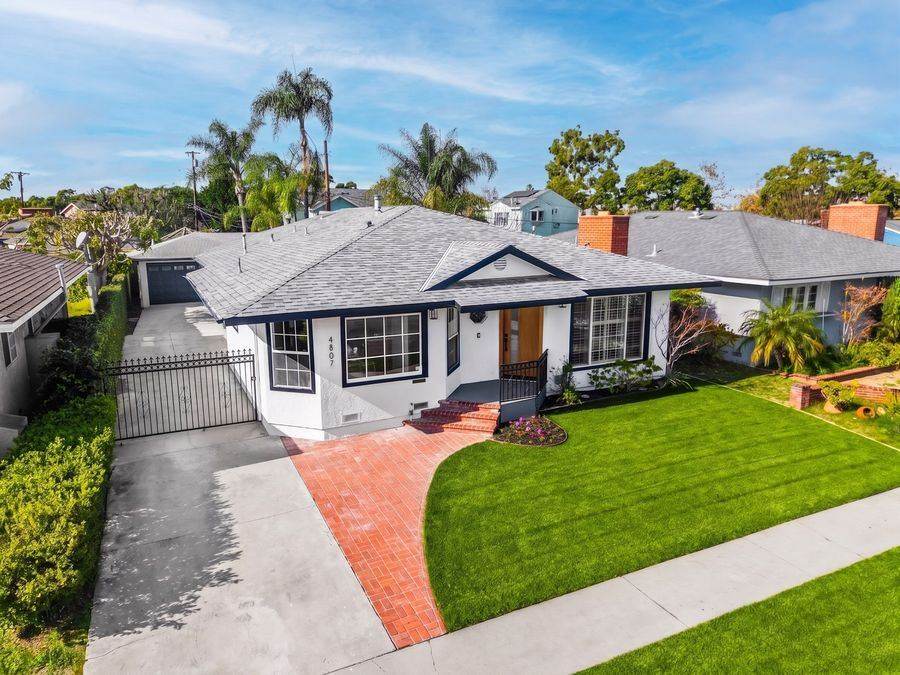
The model identifies the sky region — including the fiddly edges around tree branches, rooflines, and power lines that make manual masking tedious — and replaces it with a new sky that's matched to the scene's existing lighting direction and color temperature. A photo shot in warm afternoon light gets a sky that matches that warmth, rather than a sky that looks pasted in from a completely different time of day.
Choosing a sky that matches the rest of the shot
The single most common mistake with sky replacement — manual or AI — is picking a sky whose lighting direction contradicts the shadows already in the photo. If the shadows in your original shot clearly indicate the sun was on the left, a sky with dramatic clouds lit from the right will read as wrong even to someone who couldn't tell you exactly why. A good replacement respects the lighting that's already baked into the rest of the frame — clear blue, partly cloudy, and dramatic cloud options should all still track the sun position of the original shot.
When it's worth doing
Sky replacement earns its place on exteriors where the sky takes up a meaningful portion of the frame — front-of-house shots, wide establishing shots, and anything with a low horizon line. It's less impactful (and less necessary) on tightly cropped detail shots where the sky barely registers.
Fix a flat sky without a reshoot
Rawport AI's Sky Replacement includes Clear Blue, Partly Cloudy, Dramatic Clouds, and Golden Hour Sky styles, matched to your photo's existing lighting. 5 free credits to start.
Try It Free