Virtual Twilight Photos: How AI Creates Stunning Dusk Listings
Twilight photos are one of the more reliably effective tricks in real estate photography — warm interior light glowing through every window, a deep blue-to-indigo sky, a house that suddenly looks like a home rather than a listing. They also happen to be one of the most annoying photos to actually shoot.
Why twilight photos work
A daytime exterior shows a buyer the house. A twilight exterior sells them a feeling — the golden window glow reads as warmth and comfort in a way flat daylight just doesn't. It's also a genuine differentiator: most listings in a given search results page are daytime shots, so a twilight hero image tends to stand out by contrast alone.
Why shooting it for real is a pain
The "golden hour" for a proper twilight exterior is short — typically a 20-30 minute window right after sunset, before it's too dark to retain detail in the sky and landscaping. That means:
- The shoot has to happen at a specific time on a specific day, which is a scheduling headache when you're juggling a full listing calendar.
- Every interior light in the house needs to be on before that window opens, which usually means a second person on-site or a very well-planned solo shoot.
- Weather can wipe out the shot entirely — an overcast evening kills the color gradient you're going for.
- You get one shot at it. If anything goes wrong, you're rescheduling for the next evening, not just retaking a frame.
None of that is a reason to skip twilight shots — it's just why they've historically been reserved for higher-budget listings rather than every property.
How AI virtual twilight actually works
Instead of scheduling a second shoot, a well-lit daytime exterior gets converted directly: the sky shifts to a twilight gradient, window glass gets a warm interior glow added behind it, and the overall color temperature shifts to match. The output isn't a filter laid over the original — it's closer to what your camera would have captured if you'd actually been standing there thirty minutes after sunset with every light in the house on.
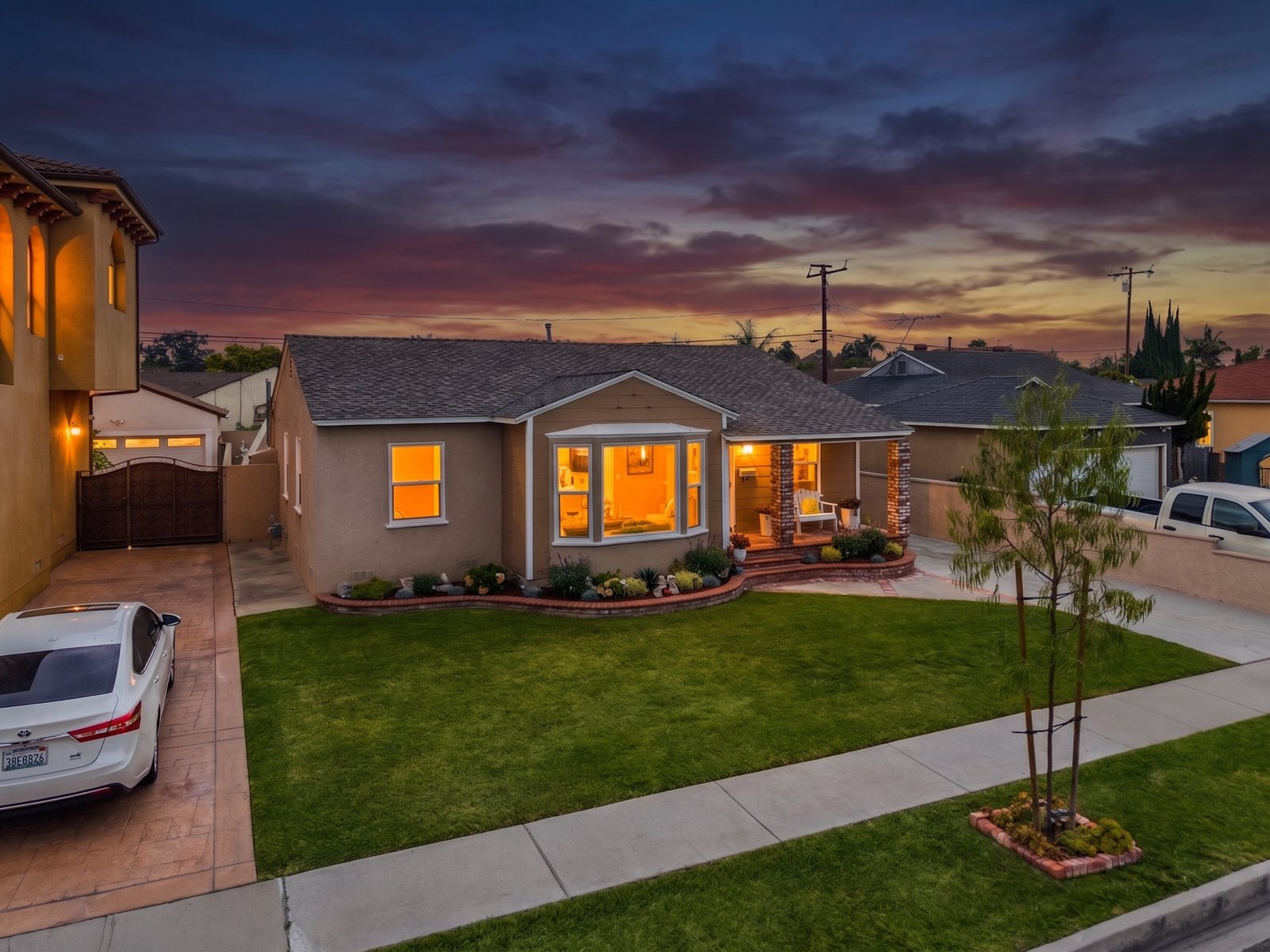
What makes a good source photo for this
Not every daytime exterior converts equally well. The ones that work best share a few traits:
- Visible windows facing the camera. The interior glow effect needs windows to work with — a shot where the facade is mostly blank wall won't read as convincingly warm.
- A reasonably clear or partly-cloudy original sky. Heavy overcast skies with no visible texture give the conversion less to work with for a natural-looking dusk gradient.
- Good original exposure. A photo that's already underexposed or blown out in the sky will carry those problems into the converted version.
- A straight-on or three-quarter angle of the front of the house. This is the classic twilight hero shot for a reason — it's the angle that shows the most window glow and the most sky.
Where to use it
Twilight conversions earn their spot as the lead photo or one of the first three images in a listing — that's where the emotional impact of the warm glow actually influences whether someone clicks in further. Using it as photo #14 of 20 wastes the effect; by then, the buyer has already formed their impression.
Turn a daytime exterior into a twilight hero shot
Rawport AI's Virtual Twilight tool includes Golden Hour, Blue Hour, Dramatic Dusk, Warm Glow, and Subtle Glow styles. 5 free credits to start.
Try It Free